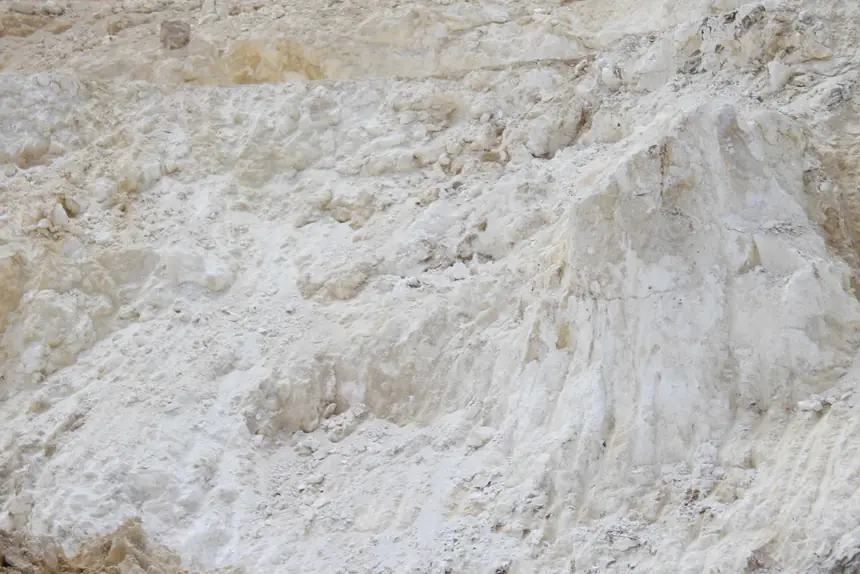

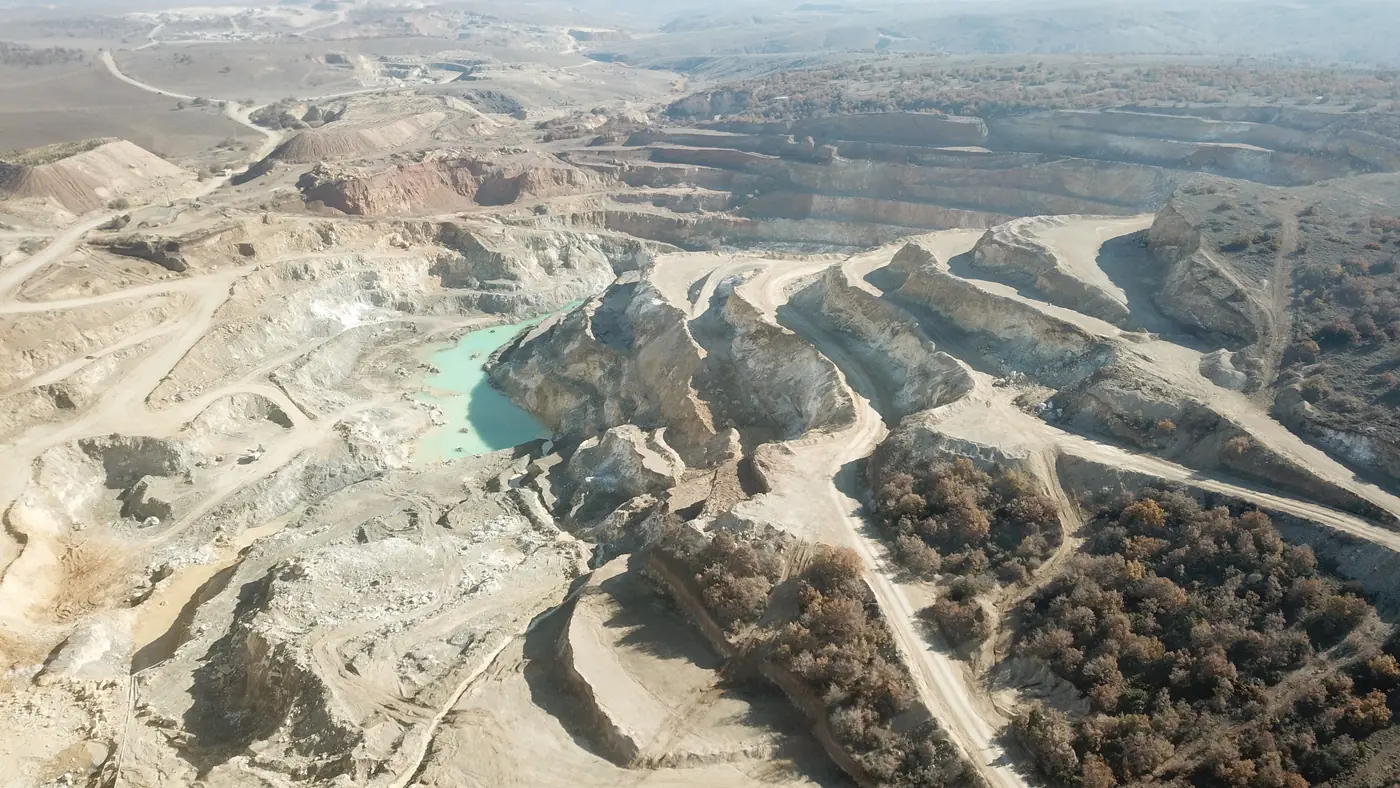
Sorting is one of the stages that decides quality in magnesite production. At our Ballık site the ore is sorted by hand on the belt using colour and texture (see our article on hand sorting). Worldwide, sensor-based sorting systems are becoming more common.
How does it work?
Each piece moving on the belt is scanned by a sensor. Software classifies it as accept or reject, and air jets separate unwanted pieces within milliseconds. Optical sensors look at colour, while X-ray transmission (XRT) looks at the density and atomic make-up of the material, so XRT can also tell apart pieces with dirty surfaces or little colour difference.
Example: Kunwarara, Australia
At QMAG’s Kunwarara magnesite deposit, older laser sorters removed sandstone, gravel and dark dolomite. They were replaced with TOMRA XRT sorters. According to the companies, the new system made it possible to process high-calcium material that could not be handled efficiently before, producing much lower-calcium grades, with significant savings in energy and water. A second XRT unit was added to increase capacity.
Where hand sorting fits
Sensors give consistent results at large, continuous volumes; experienced teams can read subtle differences such as lustre, broken surface and texture in coarse pieces. The two approaches complement each other.
Source: TOMRA Mining (2023).