

Magnesite
Magnesite (MgCO₃) is the basis of refractories, the indispensable raw material of high-temperature industry.
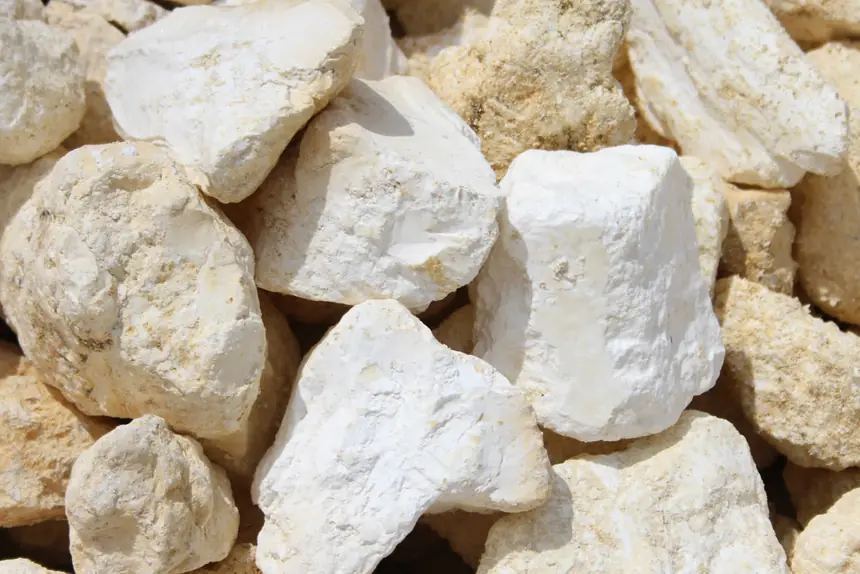
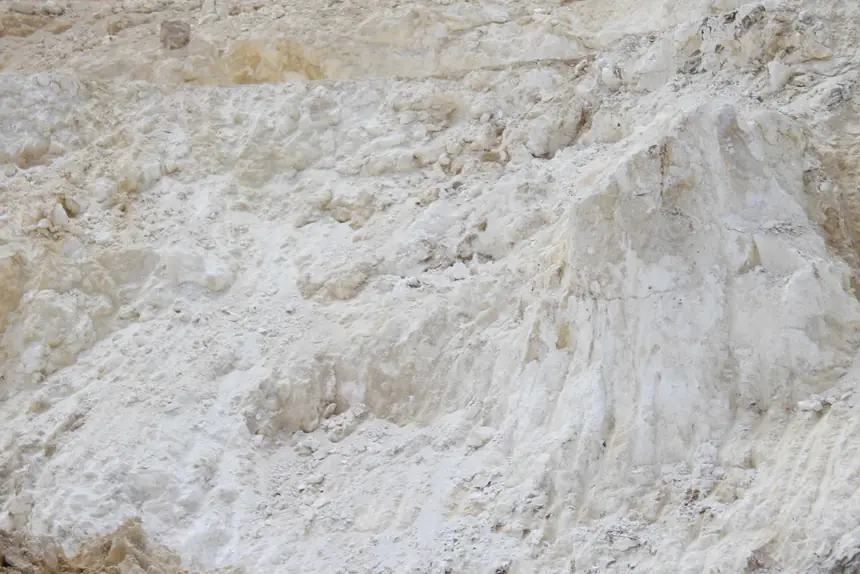
What is magnesite?
Magnesite is a mineral composed of magnesium carbonate (MgCO₃).
Calcining magnesite above 1,400 °C produces sintered (dead-burned) magnesia; calcining at around 900 °C produces caustic calcined magnesia. Worldwide, 75% of sintered magnesia is made from the mineral magnesite.
Almost all sintered magnesia is consumed by the refractory industry as basic refractory brick and monolithics. At least 70% of basic refractory brick goes into the furnaces and ladles of metal refining, cement rotary kilns and the steel industry. Monolithic mortars are used for ramming, casting and repair in furnaces and ladles.
- 1,400 °C+Calcination for sintered magnesia
- ~900 °CCalcination for caustic magnesia
- 75%Share of sinter made from magnesite worldwide
- 70%+Share of basic brick used in metals, cement and steel
Uses of caustic calcined magnesia
Its uses range from animal feed to uranium carbonate leaching systems.
Agriculture and livestock
Added to animal feed as a fine powder; used in coarser grades by the fertiliser industry.
Construction
In flooring, insulation blocks and lightweight building elements.
Pharmaceuticals and medicine
In the pharmaceutical industry and medical applications.
Chemicals
As a starting material for magnesium compounds.
Rubber and plastics
As a stabiliser and vulcanising additive.
Paper
In the paper industry.
Automotive lubricants
As an additive that neutralises acids in high-speed engines.
Uranium oxide recovery
As an absorbent and catalyst in carbonate circuits.
Why are refractories strategic?
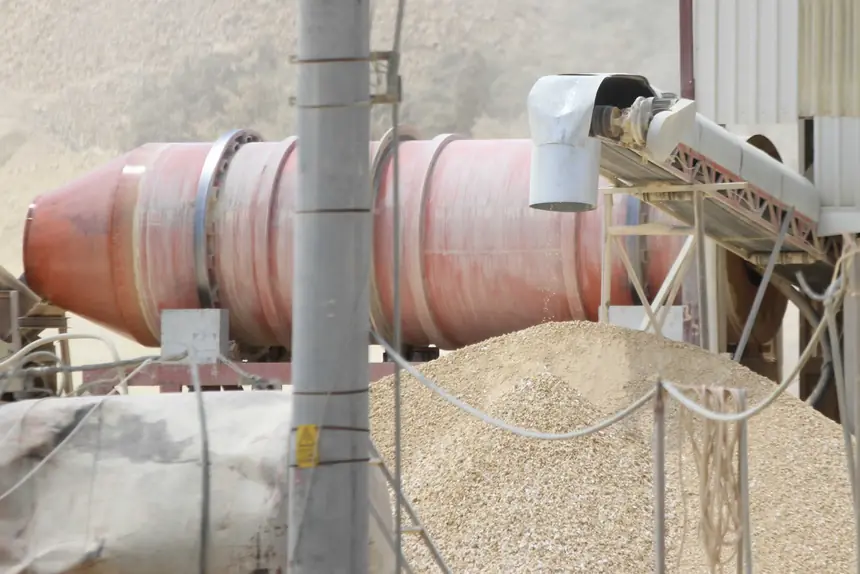
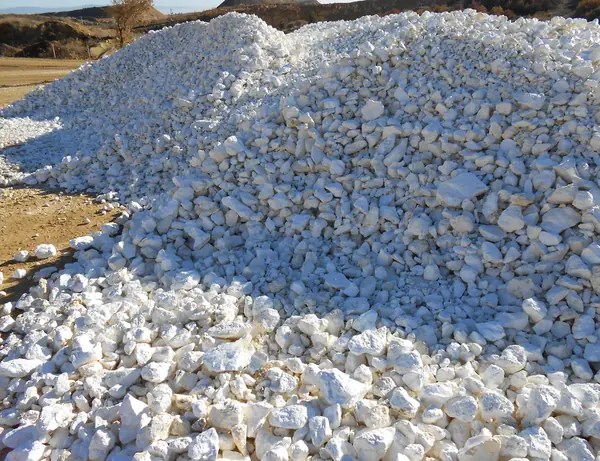
Refractories keep high-temperature industry running: blast furnaces and converters in iron and steel plants, electric arc furnaces in steel foundries, cement rotary kilns, coke ovens and glass melting furnaces, ceramic kilns, power-station boilers, aluminium plants and lime kilns.
These materials have a limited service life, and furnace linings must be renewed at intervals. A plant that cannot obtain refractories on time may have to stop production, and in a country that relies on imports, a supply disruption can affect its entire basic industry. That is why refractory raw materials are of strategic importance.
How is magnesite beneficiated?
Magnesite technology starts with mining. Depending on the shape and size of the deposit and the distribution of the ore, open-pit mining is the most common method. The typical gangue minerals of crystalline magnesite are dolomite, biotite, garnet, talc and some quartz; those of cryptocrystalline (gel) magnesite are serpentine and opal.
Hand picking and sorting
Sorting based on the colour difference between magnesite and the gangue minerals. The grain size needs to be above 25 mm. Sorting can also be automated with optical sorters. At our Ballık plant, hand sorting is carried out by experienced teams.
Dense-medium separation
Uses the density difference between magnesite and the gangue minerals. Cones, drums and cyclones serve as dense-medium vessels, and atomised ferrosilicon with a density of 6.7–6.9 g/cm³ is used as the medium.
Magnetic separation
Because serpentine has a higher magnetic susceptibility than magnesite, the two minerals can be separated magnetically at suitable grain sizes, provided the serpentine is only slightly altered. At our plant, the 0.5–2 cm fine ore passes through a magnetic separator.
Electrostatic separation
There is a small difference in dielectric constant between magnesite and the gangue minerals, but the method is costly and rarely used in practice.
Flotation
Fatty acids and soaps are generally used as collectors to separate magnesite from carbonates, silicates and hydrated iron oxides. Flotation takes place in a slightly alkaline medium; soda, Calgon and sodium silicate are added to precipitate dissolved calcium, and depressants such as sodium sulphide, sodium silicate and tannic acid are chosen according to the gangue.
Other methods
Separation by hydration, by graded calcination, and by calcination combined with gravity separation.
A short history of magnesite
J.-C. Delamétherie gave the name “magnesite” to magnesium carbonate, sulphate, nitrate and chloride salts. A. Brongniart also used the term for magnesium carbonate and silicates.
C. F. Ludwig described natural magnesium carbonate from Moravia.
D. L. G. Karsten applied the name to magnesium carbonate alone.
First records of magnesite used as a refractory in metallurgy (1866–1868).
In France, synthetic magnesia was produced by precipitating magnesium hydroxide from seawater.
It began to be used in Europe as a lining for Bessemer and open-hearth furnaces.
Magnesia (MgO) was produced from dolomite in Pennsylvania, USA.
Magnesite production began in Türkiye and grew rapidly after 1962. Calcined magnesia production started in 1940 and rose after 1964.
French and Austrian investors built calcined magnesia plants in the Sepetçi and Margı (Kozlubel) villages of Eskişehir; these plants are no longer in operation.
Ceramic and industrial applications
Talk to our sales team about product and grain-size options for the ceramics sector and other industrial users.
Write to us for samples, analyses or pricing.
Our team will get back to you about products, shipping and partnerships.