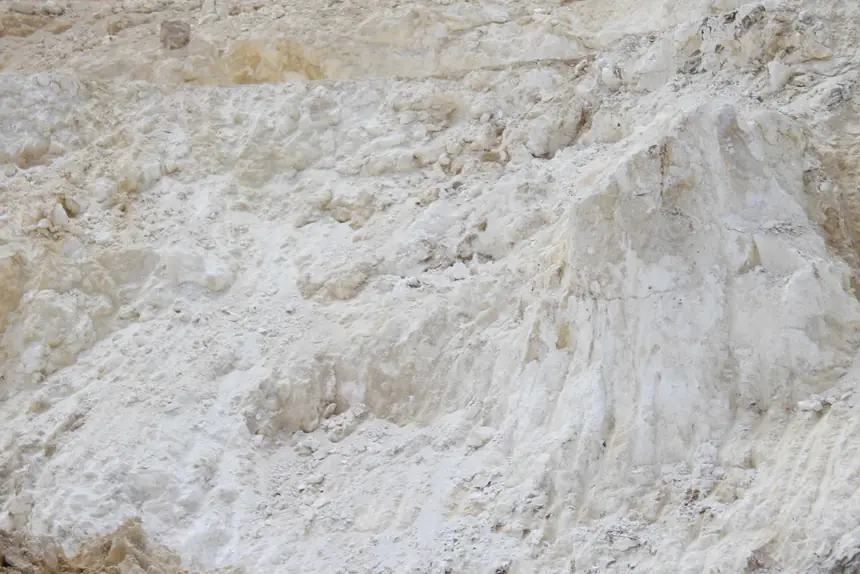

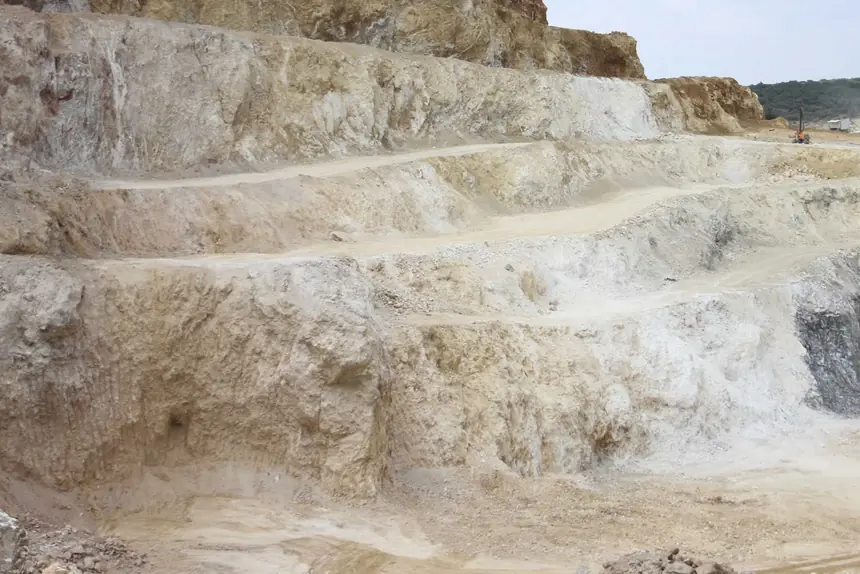
Magnesite, calcite and dolomite all belong to the carbonate minerals and can look very alike in the hand. Their chemistry differs, however, and that difference decides how industry uses them: calcite, the main mineral of limestone, is the raw material of lime and cement; dolomite serves the glass and steel industries; and magnesite is the raw material of basic refractories.
| Property | Magnesite | Dolomite | Calcite |
|---|---|---|---|
| Formula | MgCO₃ | CaMg(CO₃)₂ | CaCO₃ |
| Hardness (Mohs) | 3.5–4.5 | 3.5–4 | 3 |
| Density (g/cm³) | ~3.0 | ~2.85 | ~2.71 |
| In cold acid | No fizz | Powder fizzes weakly | Fizzes strongly |
The acid test
The most common field method is to put a few drops of cold, dilute (about 10%) hydrochloric acid on the sample. Calcite fizzes immediately and strongly. Dolomite only fizzes weakly when powdered or scratched. Magnesite barely reacts to cold acid at all; the acid has to be warmed before it fizzes. Wear gloves and safety glasses when working with acid.
Weight and hardness
When pieces of the same size are weighed in the hand, magnesite feels slightly heavier because of its higher density. Hardness is another clue: calcite is easily scratched with a steel knife, while magnesite and dolomite resist it better.
The final word comes from the lab
Field tests give a quick first idea. For a definite answer you need a chemical analysis (XRF) or mineral identification (XRD). We explain how to read magnesite analyses in a separate article.