
Magnesite is best known for refractories. But caustic calcined magnesite, the reactive magnesium oxide obtained by firing at lower temperatures, is also widely used in agriculture. The reason is simple: magnesium is an essential nutrient for both plants and animals.
Magnesium for plants
Magnesium sits at the centre of the chlorophyll molecule that makes leaves green; photosynthesis cannot happen without it. Deficiency usually shows first on older leaves, as yellowing between the veins. Sandy and acidic soils, intensive harvesting and unbalanced fertilising (especially high potassium) are the main causes.
Fertilisers containing magnesium oxide add magnesium to the soil and also help raise the pH of acidic soils. Which product to use, and how much, should be decided from a soil analysis.
Magnesium in animal feed
Magnesium oxide is one of the most common sources of magnesium in cattle feed. Grass tetany (hypomagnesaemia), caused by low blood magnesium and seen especially in cattle grazing fresh spring pasture, is prevented by adding magnesium to the feed. In dairy rations, magnesium oxide is also used as an additive that helps balance rumen pH. The amount in the ration is set by a veterinarian or animal nutritionist.
Why the raw material matters
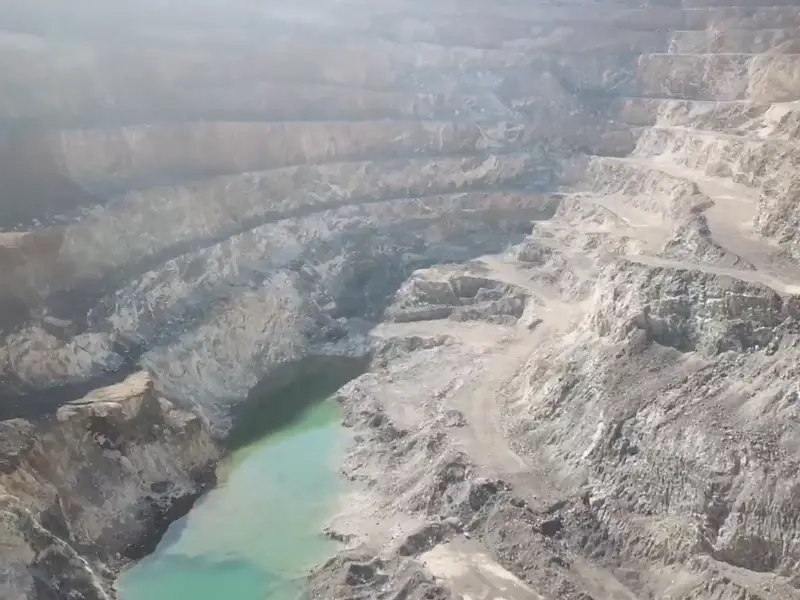
For magnesium oxide used in agriculture and feed, freedom from unwanted components matters as much as MgO content and reactivity. These products are made by firing raw magnesite at the right temperature, so quality starts with the ore from the pit. We explain the difference between caustic calcined and sintered magnesite in a separate article.