
Magnesia cement is a binder made by mixing caustic calcined magnesite (reactive MgO) with a magnesium chloride solution. It was developed in 1867 by the French chemist Stanislas Sorel, so it is also known as Sorel cement; its chemical name is magnesium oxychloride cement.
Properties
- Sets fast and gains high strength quickly
- Non-combustible and fire resistant
- Binds well with wood shavings, wood flour and mineral fillers
- Light-coloured when set and easy to tint
Its weak point is water resistance: strength can drop in permanently damp conditions. That is why it is mostly used indoors or with a protected surface. Oxysulfate cements, made with magnesium sulfate instead of magnesium chloride, serve similar purposes.
Where is it used?
- Industrial floor toppings (xylolite floors)
- Fire-resistant MgO wall and ceiling boards
- Grinding and sharpening stones
- Insulating and lightweight building panels
What the raw material needs
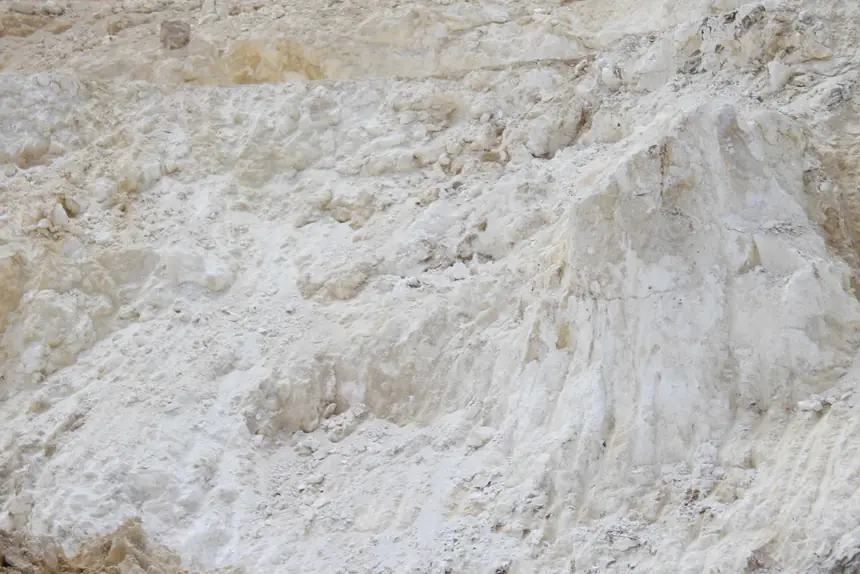
The quality of magnesia cement depends on the reactivity of the magnesium oxide used. That is why caustic calcined magnesite fired at the right temperature and high in MgO is preferred. And the first condition for good calcination is clean, consistent raw magnesite.